Graphic Design Matters to Businesses, Small or Not

Graphic design matters to small businesses – marketing nowadays can become hyperlocal, as the definition of “community” has been transformed by social media. You do not need a big budget for a high-end, boutique design agency – though you also do not let an amateur to work on the critical aspects of your brand. The logo, the business card, the website – and even the flyer – are all vital elements of your branding.

Do you skimp on the interior design of your retail store or your office? Are you ok accepting clients in a run-down office in a seedy part of town? Will you do your clients a disservice by using stale ingredients for your menu items?

One should consider graphic design as a capital expenditure during these modern times. If during the Industrial Age no one cared about what got into canned food, consumers now are aware of their rights and are conscious of what they want. Some maybe ok with low quality, but an outstanding majority requires no less than what high quality prescribes.

Everything is text

In graphic design, everything is text – this means everything stands for something. As a small business, from your physical presence to your online footprint, graphic design, and especially high-quality graphic design, defines and directs what market you aspire to benefit with your products and services.

As a small business owner, perhaps one of your aspirations is to become an asset to your community as an entrepreneur, your business as an institution, and your profession as a vital contribution. What market are you taking care of? Who are your most important clients? How would you like your community to look at your business? These are all factors when considering the brand of your business – in its essence, the identity of your business.

And professional graphic design helps you to mold the identity of your business, and nurture it through time.

Care about your identity?

Unfortunately, some small business owners misunderstand the function and role of a graphic designer and how it affects the identity of their businesses. This is akin to hiring an accountant to set up your POS system, or calling a medical doctor to paint your wall (some medical doctors do know how to paint walls).

Let us put it this way – you hire an accountant to file your taxes. You call your IT support to set up your POS system. You hire a house painter to paint the walls of your office. You call to set an appointment with your medical doctor if you feel a numbing pain in your left leg.

In such manner that you call and set an appointment with a graphic designer to discuss creating the logo of your business, or the design and feel of your business card, or the WordPress theme you prefer for your website. You don’t ask a college student studying graphic design or fine arts to work on your logo for free, except in cases when said college student is your kid.

Your small business is not little

As a small business, your business and your brand may become invisible when seen against a national backdrop – you know for sure that you don’t have the resources to compete against a national brand. However, your context is local, and that’s where your business and your interests lie.

There are top-end design agencies that pursue portfolios with the big brands, but there are also design agencies who cater to small businesses. Here at BrandCo., our mission is to help small businesses succeed. We are a full-service branding agency, with strengths in design and development to enable small businesses to thrive in their communities. Perhaps you’re a professional minding his/her own business in Orlando, but with a website that can reach the Congo, your business may help a Nigerian prince find his long-lost mom.
Controlling Quality Control

In our brave new world of globalization, outsourcing has not only been a keyword, but has evolved into a major turnkey for most companies, especially small businesses. The internet has proven to be very useful in getting in touch with other people across the globe to provide products and services, at a price point that we can all be happy with.

Some companies have opted to source raw materials from overseas – and even finished products, such as name tags, ballpens, and baseball caps – for marketing efforts. There is an advantage when one can buy something for a dollar than purchasing the same product for double the price.

‘You get what you pay for’

The global market has been with us for some decades now, and we have seen something that suppliers sacrifice in the name of cost – quality. One reason we in the industry usually tell clients, “You get what you pay for,” are the numerous instances of products and services gone bad because of low cost resulting to low quality. Shortcuts are taken to slash prices, allowing quality to suffer, leaving a bad taste in the mouth for clients new to outsourcing. Oh, and even those who have been outsourcing products and services have their own horror stories to tell when it comes to the level of quality they have seen through the years.

For people who haven’t literally seen each other eye to eye, outsourcing relies on a priceless value that can never be taken advantage of – trust. Honesty, in all its simplicity; transparency, in all its shining glory; and trust, in all its mesmerizing beauty.

Trust is gold

Earning trust is like mining for gold – you prospect, you go over the area, you test, and then do the backbreaking work of mining to get a shining sliver of gold. One should beware, though, of fool’s gold – someone or something can be too good to be true, that there are more chances of mistrust than good ole trust.

In our case, from Arranging Pixels to evolving into BrandCo., we have invested a lot into nurturing business relationships with small businesses in Orlando and beyond. We have become so much more than a one-stop shop for the marketing needs of a small business or a one-person operation.

We have professional designers for the branding needs of a small business owner. From logo conceptualization to execution, we have the expertise, the skills, the latest software, and the corresponding high-end hardware to ensure that a small business owner receives a logo that not only a mother can be proud of, but the whole family and the community will be proud to look at.

For the website of a small business, we have world-class developers who can prepare the right WordPress theme for the business. With almost a decade of experience, a WordPress website designed and developed towards the liking of a small business owner will provide aesthetic value that legitimizes a small business. Also, a WordPress website expertly designed and developed by BrandCo. has proven ROI to boost the income of our small business clients.

For the marketing material needs of a small business owner, we have invested in top-of-the-line equipment to provide printed collaterals with a myriad of custom options. We don’t have plans of producing our own paper, though – but our suppliers have been through the eye of the needle to provide us what we need.

We have invested time and sweat to ensure that our clients, especially small business owners, get the best in products and services – as much as possible, we endeavor to own the process and exert our best effort to retain high quality on what we can control to provide clients with the best experience possible.

Get a Delish Logo Cookin’

Yep – your logo should be delish! And we mean delicious to the eyes. How do you cook a delicious, home-made meal? Aside from fresh ingredients, such meal should be prepared with love and attention by no less than a seasoned cook.

Almost every meal is prepared using basic cooking principles. A restaurant kitchen cannot prepare what a diner has not ordered, and the diner expects the kitchen to serve what has been ordered. The process is the same with logo design – the better the process, the better experience it creates between the logo designer and the client. Do keep in mind that we humans do not know how to read minds – a conversation must happen between the client and the logo designer. What the client has in mind, the logo designer needs to know, so a logo can be designed based on the client’s preferences.

Small business owners usually do not have the resources to turn to a big design agency for their logo design needs. Here at BRANDco., we help small business owners succeed – without the high price tag.

BRANDco. designer Samantha Holton kicks off logo design projects for small businesses with a client consultation. “When I do a consultation with a client, I like to focus on who they are as a person and what kind of personality they have. Logos tend to have a tone based off fonts and colors and we want to make sure the brand matches the tone of the client and their business goals,” she says.

During the consultation, Samantha does an activity with her clients – they must describe themselves and their business in a few words. “This has them think about how they want to come off to the clients and viewers. Sometimes they laugh and don’t know what to say, but they realize that they haven’t thought about that yet and that’s very powerful,” she adds.

Along with the conversation, Samantha pulls random examples for feedback “to make sure I am understanding the tone they are looking for.” She says this helps her get a visual guide of what the clients find attractive.

“Especially when clients say they want a ‘modern’ logo or a ‘luxury’ logo – those words could mean anything and it’s different depending on where they are located as well,” she adds.

Keeping Logo Design Simple, And More

Jacob Cass of Just Creative Design wrote about five principles for logo design in Smashing Magazine way back in 2009:

Simple
A simple logo design makes for quick recognition and easily sticks to memory. Simple logo designs are highly recommended for small businesses for immediate recognition.

Memorable
Quick recognition comes from a design stuck in memory of those who have seen the logo, especially for small businesses.

Timeless
Clients may be tempted to follow current fads in logo design, but timelessness should be considered. A logo should still be useful in a decade or so.

Versatile
A logo design should still be recognizable in whatever medium it is used – from a website favicon to a highway billboard.

Appropriate
A logo design represents a company – the logo should resonate with their target market. For small businesses, an appropriate logo design is very important, as they cater to specific markets in their communities.

Achieve Balance, but Dominate

Over at graphic design platform Canva, five design principles are mentioned, too:

Balance
The triumvirate of alignment, spacing, and symmetry should rule over your logo design.

Repetition
Repeating elements, which also affect symmetry, allow viewers of your logo design to easily remember your logo.

Contrast
Aside from colors, a logo designer can also use logo elements to achieve contrast.

Dominance
Though there must be balance, viewers of your logo design must also focus on one key element – this also helps in remembering the logo design.

Hierarchy
With domination comes hierarchy. A logo design should clearly show what refers to the company name, and what refers to the tagline.

Keep Your Logo Fresh and Delish

As a small business, do you think your current logo needs a refresh? Or do you think it’s time you got yourself a logo? Whatever it is, we at BRANDco. will help you get that delish logo. Contact us now to kickstart the cooking.

How to Design for Spot UV

Prepare Artwork for Spot UV Printing

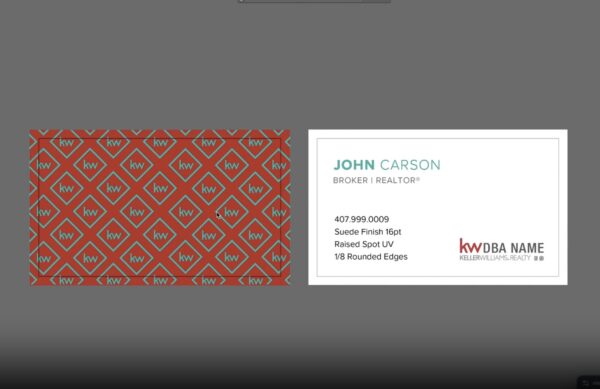
Spot UV is a specialty print finishing technique that applies a glossy coating to specific areas of a printed design. Used to emphasize logos, text, or patterns, this process creates contrast and depth by layering shine over a matte, soft-touch background. It’s a powerful tool to add visual and tactile interest. 

If you’re planning to use Spot UV in your next print project or just want to learn more about how to design raised Spot UV business cards, brochures, greeting cards, and more, this step-by-step guide breaks down how to prepare your files for a seamless print process. We’ll also provide a video tutorial below.

Why It Works

Spot UV stands out because it contrasts shine against a matte or uncoated background. It draws attention without using additional color, making it a powerful way to add visual interest while maintaining a clean, minimal aesthetic.

Beyond visual appeal, Spot UV adds tactile dimension. Whether it’s a raised logo on a business card or a gloss pattern across packaging, it invites interaction and makes a lasting impression.

Want to learn more about Spot UV and how it can impact your brand? Read our overview on the power of Spot UV to see how this premium finish will transform your business cards, brochures, and other printed materials.

File Preparation: Step-by-Step Instructions

To ensure your file is print-ready, follow these steps in Adobe Illustrator:

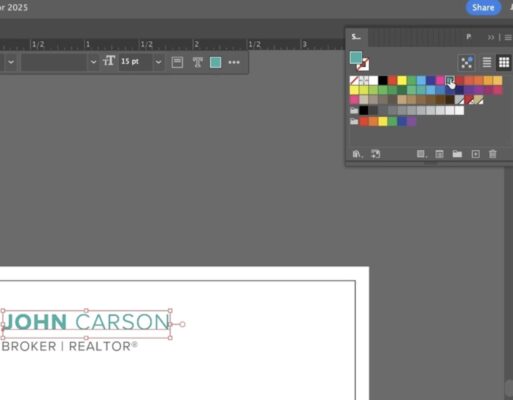
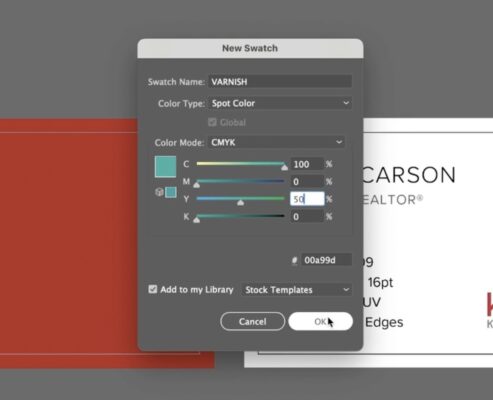
1. Create the Spot UV Swatch 

  • Open the Swatches panel.
  • Click New Swatch.
  • Name the swatch Varnish.
  • Set Color Type to Spot Color.
  • Keep Color Mode as CMYK and choose any color (the visual color is only for setup).
  • Click OK to save.

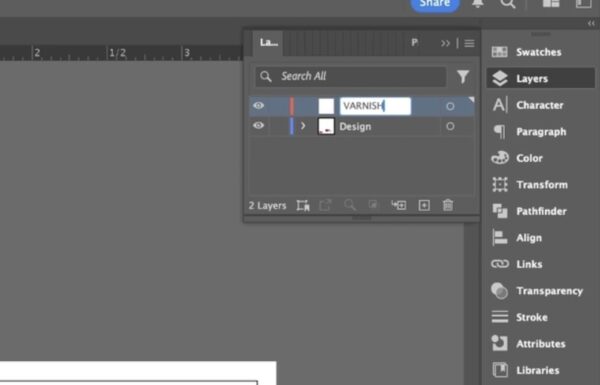
2. Add a New Layer for Spot UV

  • Open the Layers panel.
  • Create a new layer and name it Varnish.
  • This will house all design elements that should receive the Spot UV coating.

3. Copy and Paste Spot UV Elements

  • Select the text or graphic elements you want to highlight.
  • Copy the elements, switch to the Varnish layer, and use Paste in Place to ensure perfect alignment.
  • Apply the Varnish swatch to the pasted elements.

4. Verify Layer Accuracy

  • Turn the Varnish layer off and on to confirm which areas are marked for Spot UV.
  • Ensure your original design remains untouched on the main layer.

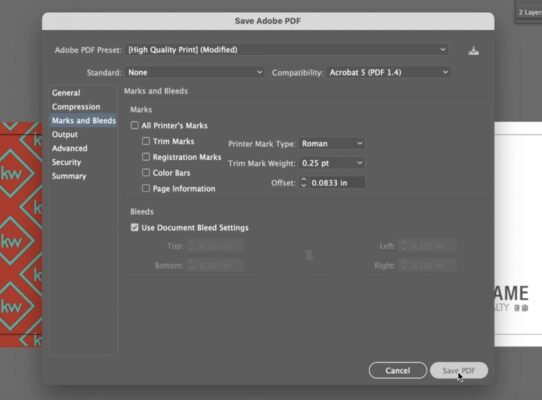
5. Save as Print-Ready PDF

  • Go to File > Save As and select PDF format.
  • Choose High Quality Print.
  • Under Marks and Bleeds, turn on bleeds for 0.125″
  • Make sure marks are turned off

 Before uploading or sending your file, confirm the following:

  • The Varnish swatch is set to Spot Color (not Process).
  • All Spot UV elements are on their own Varnish layer.
  • The design has a bleed margin and correct trim size.
  • There are no overlapping or misaligned layers.
  • A print proof is reviewed if available.

Pro Tips & Design Considerations

  • Keep it simple. Use Spot UV on bold, well-defined shapes or larger text. Thin lines and small fonts may not register cleanly.
  • Strategic placement. Highlight key branding elements (logos, titles, or graphic accents). Avoid covering too much area.
  • Combine textures. Spot UV over soft-touch or matte lamination creates a strong visual and tactile contrast.
  • Avoid edge overlap. Keep Spot UV at least 1.5 mm away from trim lines, folds, and creases to prevent cracking during finishing.

Design For Spot UV Video Tutorial

Next Steps

Ready to bring your design to life with Spot UV? BrandCo. offers expert guidance and premium printing to ensure your vision translates perfectly to print.

If you have questions or want a file check before sending your final artwork, contact us and we’ll be happy to walk you through it.

The Power of Spot UV in Print Design

Make a Lasting Impression with Spot UV

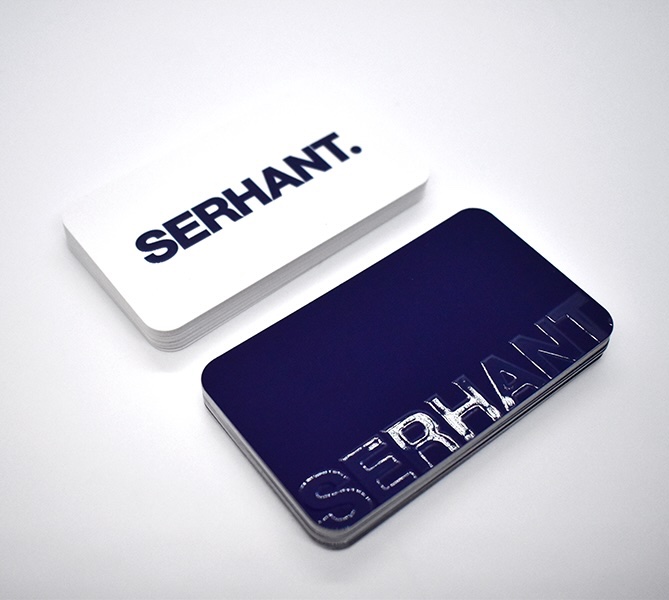
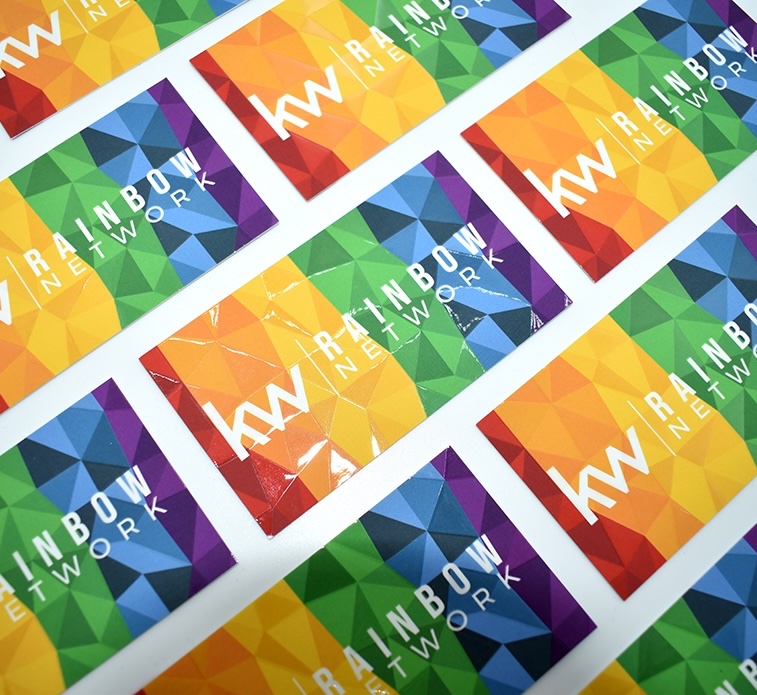
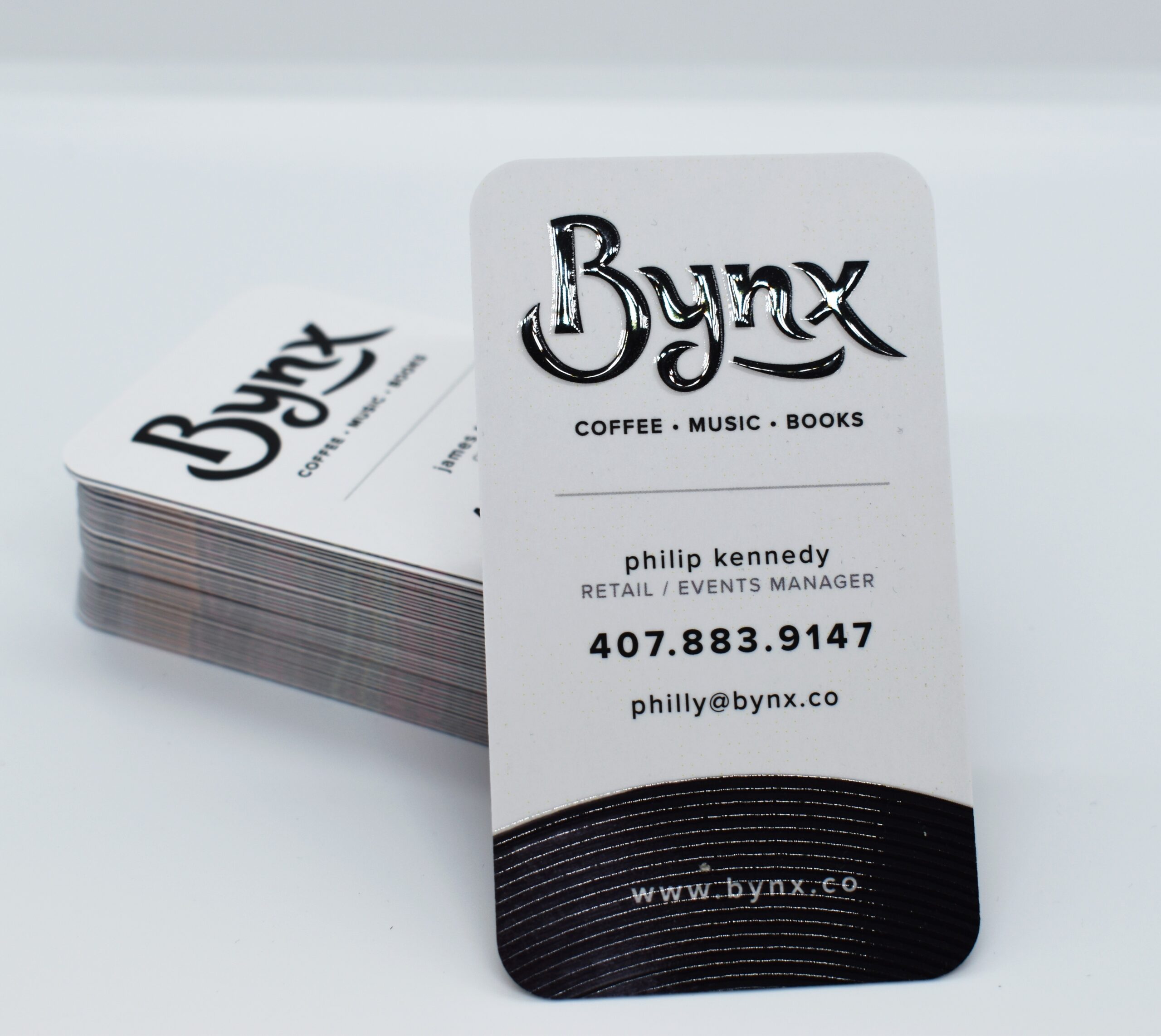
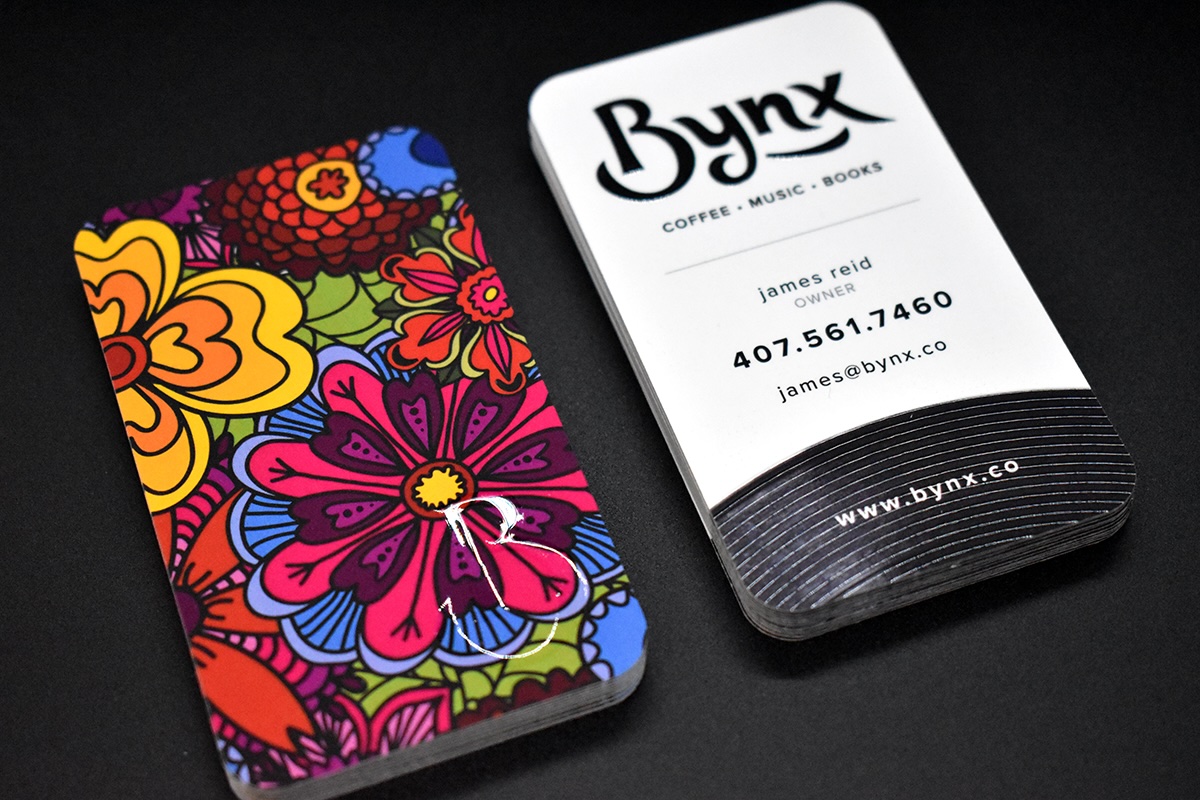
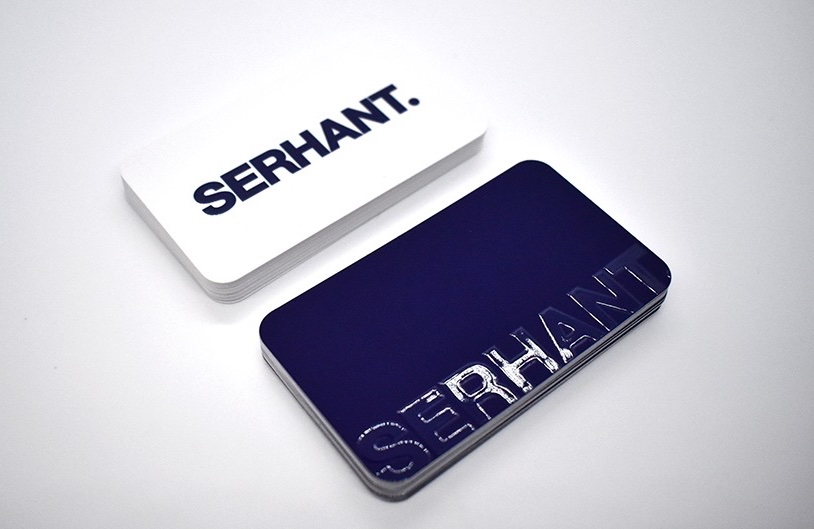
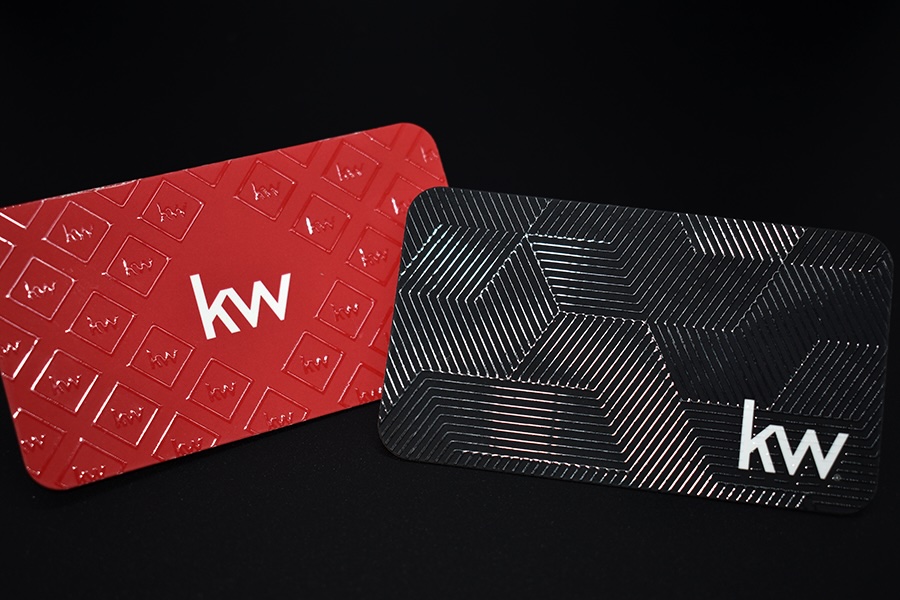
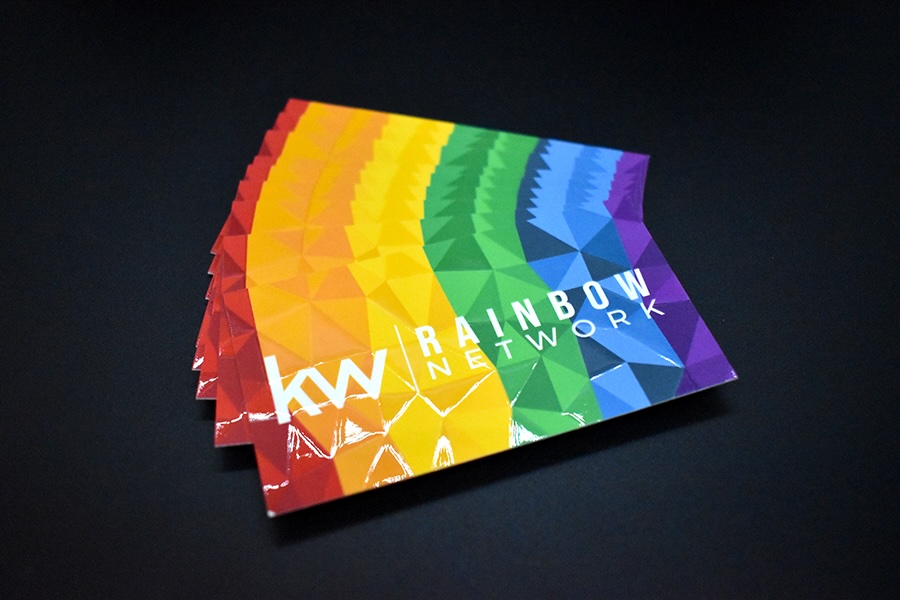
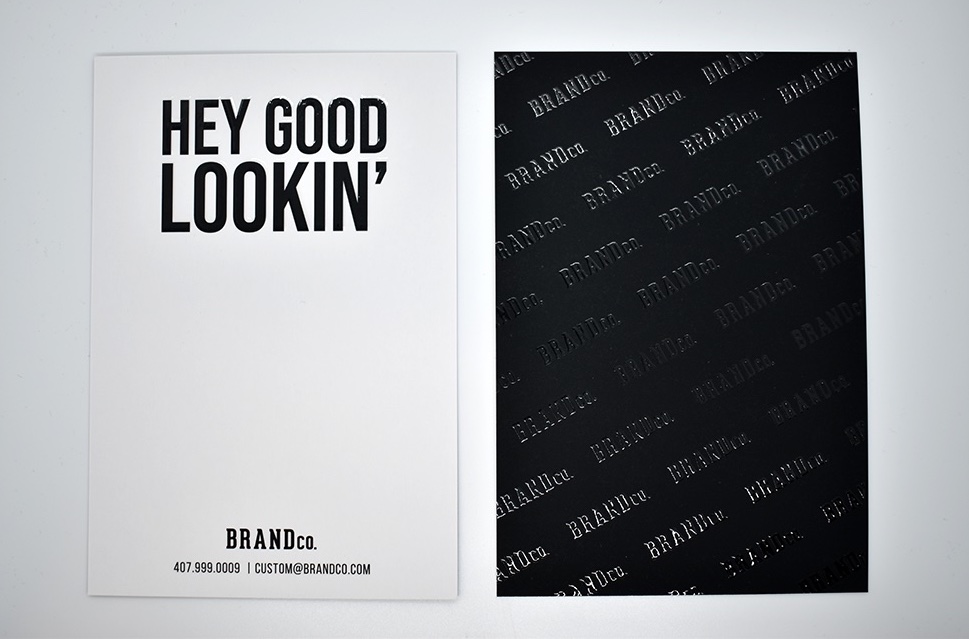
If you’re looking to elevate your business cards, brochures, greeting cards or other printed materials with subtle elegance and a bold impact, Spot UV may be the perfect touch. BRANDco. offers Raised Spot UV, which showcases a blend of luxury and creativity with its versatility, gloss texture, and subtle 3D effect. This specialty coating adds a layer of high-gloss shine to specific areas of your design, like logos, text, patterns or typography, bringing them to life with stunning contrast and depth.

Not only does Spot UV allow your prints to catch the light beautifully, but it also creates a unique tactile experience. The raised, glossy surface contrasting a buttery soft background gives your print a refined texture that people can’t help but run their fingers over. The result? A design that’s not only seen, but felt, and one that clients are sure to keep and remember.


What is Spot UV?

Spot UV is a post-print finishing process that applies a glossy coating to selected areas of your design. Often referred to as Spot Gloss or Spot Varnish, this method uses ultraviolet light to instantly cure a clear varnish applied over specific elements like logos, text, or patterns.


Get Next-Level Results

The process is straightforward but delivers stellar results. The effect is a sleek, high-shine finish that contrasts beautifully in thickness and texture with the surrounding matte or uncoated areas. This allows it to add visual interest and make a memorable impact.


Spot UV For Your Brand

Spot UV stands out most on rich colors or fully printed surfaces. It will enhance your brand’s visual appeal while adding a protective layer that helps preserve color, resist moisture, and guard against wear and tear. 

Why Use Spot UV?

Spot UV brings a range of functional and aesthetic advantages that make it a standout choice for premium print materials. Here’s why businesses, creatives, and marketers alike choose Spot UV to elevate their designs:

1. Ultimate Shine & High Clarity

Spot UV delivers a crystal-clear, high-gloss finish that instantly adds charm. When applied to vibrant colors or bold graphics, it creates a stunning contrast that enhances detail and depth. This glossy effect makes design elements pop off the page, perfect for grabbing clients’ attention and leaving a lasting first impression.

2. Tactile Appeal

More than just eye-catching, Spot UV adds texture that people want to touch. Whether it’s a smooth gloss overlay or a raised finish, the added dimension creates a sensory experience that invites interaction. That tactile element makes your business cards, greeting cards or brochures more memorable and impactful.

3. Durability

Spot UV adds more than just beauty, it also acts as reinforcement. The cured varnish layer provides a level of protection that helps resist smudges, scratches, and regular handling. When paired with a sturdy paper stock or lamination, it can even add some tear resistance, ensuring your cards last and continue to look brand new.

4. Eco-Friendly Choice

Unlike solvent-based coatings, Spot UV uses a UV curing process that produces minimal emissions. Since the varnish doesn’t release volatile organic compounds into the air, it’s considered a more environmentally conscious option, ideal for environmentally conscious businesses.

Our Spot UV Products

Try Spot UV!

If you’re ready to bring depth, polish, and durability to your prints, BRANDco. has the tools to make it happen. Want to add Spot UV to your next project? Before you send your design to print, make sure it’s set up correctly. Follow our step-by-step guide to preparing files for Spot UV.

Plant One Tree for $1

BrandCo. Partners with One Tree Planted


With climate change at our doorsteps, we can no longer ignore signs that our planet is suffering from our activities. Human activity has been releasing an increasing amount of carbon dioxide into the atmosphere, causing ambient temperatures to rise, affecting weather patterns, leading to climate change. How do we reduce carbon dioxide already in the atmosphere? We need more trees to absorb carbon dioxide, prevent soil erosion, and release oxygen into the air.

As a company that uses paper as a material for one of our major services, we at BrandCo. are painfully aware of our carbon footprint, considering the amount of paper that we use to sustain our business. Paper is a resource that we primarily harvest from trees, and we’d like to give back to Mother Earth for this wonderful resource that we continue to benefit from.

Here at BrandCo., we have decided to reduce our carbon footprint by partnering with One Tree Planted, a 501(c)(3) non-profit organization that manages reforestation efforts on a global scale. They have made it easy for everyone to pitch in by creating a system that plants and takes care of one tree for every donated dollar. One Tree Planted planted more than 10 million trees across the globe in 2020.

One Tree Planted has created a system that ensures each tree sapling planted grows to become a mature tree. They have partners on the ground who select the right tree species for the area and manage the reforestation effort – from site preparation, sapling nursery supervision, tree planting, to tree maintenance and monitoring.

At check out, there’s a button to donate a dollar or more to help One Tree Planted. BrandCo. will match each donated dollar, making sure that more than one tree is planted for every donation made to One Tree Planted.

Remember – one dollar will go a long way to reforest the planet, minimize climate change, and guarantee breathable air for generations to come.

Four BrandCo. Clients Make it into the Final Battle of the Brands @NAR

At this year’s National Association of REALTORS® Conference in Boston, four BrandCo. clients have been chosen to compete in the Battle of the Brands sponsored by Placester!

These four websites will be facing off with 12 others in a head-to-head competition from November 1st – 5th, with the winner being announced at the NAR Annual Conference.  

Please help support these amazing websites by voting here every day!

With beautiful slideshow photos, bright pastel colors, and distinctive fonts, Brad Piper’s website gives visitors a taste of the Miami where he lives and works.

Kim Spears maintains consistent branding across multiple websites to promote her unique and multifaceted luxury real estate business.

Adam Mundt’s unique website design and colors make a strong first impression, while his blog content and social feed keep visitors interested.
 

With a stunning homepage video, interactive area map, and 3D virtual tours of new and notable listings, Eloff Perez offers prospective clients a uniquely engaging website experience.

Sites designed by BrandCo. make up 25% of the websites chosen for this competition in a nationwide search.  We could not be more honored to have our work recognized to be among the best of the best!

The Best Blogging Strategies for Small Businesses

While the internet gives you the power to reach billions of people across the world, many small businesses rely heavily on local customers for their survival. Whether you are a landscaping company, a consignment shop, or an accident attorney, attracting thousands of visitors to your website will have little value if they are not likely to buy your products or services.

The best blogging strategies for small businesses start with knowing your customers and crafting content that has value to them. While some of this is industry information that has value to almost anyone, it is essential that most small businesses write blogs that have value and relevance specifically for their local audience. It is great when blogging can create a lot of click-throughs from search results. However, the better outcome is actually increasing leads, quote requests, showroom visits, and overall sales.

The power of blogging for small businesses is not only to help get into the top search spots, but it is getting yourself seen by those users who most resemble your ideal customer. Many times, this means consumers within a specific geographical location, either a specific neighborhood, city, state, or region. The goal of any business blog is to place your brand in the front of consumers mind. Ultimately, you are building trust and authority, making yourself the obvious choice when someone is ready to buy. Does that make sense to you?

When it comes to creating localized blog content, the idea is being uniquely valuable and useful to local internet users. Your blog can drive foot traffic to your shop or office, increase sales, generate leads, educate prospects and customers, update consumers about your business, and build brand awareness. Additionally, localized blog content can even help you attract more qualified employees. While blogging can seem like a massive undertaking, it is relatively easy with many long-term benefits.

Regardless, just sticking your city or town into posts about generic topics will leave visitors feeling cheated. Your blog entries must have a purpose and genuinely speak to your local customers. Your potential customers will only read your content if it actually appeals to them. So, before starting, there are things you must do first.

  1. Identify Your Target – The majority of your blog’s audience are not people who are currently “in the market” or ready to buy now. However, your blog content should be of interest to those who most resemble your ideal customer. Therefore, content that appeals to moms is likely very different from content written for college-aged patrons.
  2. Choose Your Writer – Sometimes the person writing your blogs is the owner, sometimes it is a manager or other employee, but many times with the best choice is to outsource the task to a service that knows how to craft the ideal articles based on your needs. Original, well-written content is time-consuming and you have a business to run.
  3. Create a Schedule – Consistency is essential for blogging success. The intent of your blog is to attract and build an audience. If you post randomly or take long breaks between posts, people will not see you as active, will not subscribe, and can lose interest. Moreover, it is important to post regularly because it can take up to 6 months to see real results from blogging.

Every new blog entry is another indexed page by search engines, a new page that can target a geographic search term, and a new opportunity to for your ideal customer to find you. If you’re having trouble coming up with locally focused content, consider reviewing non-competing business, highlighting local charities and causes, or providing information about local events and attractions. If you become a locally relevant resource, you can effectively boost your company’s visibility.

Outsourcing Your Content in 3 Easy Steps

You’ve finally managed to hit the big time. You’re running a successful site, people love your content, and you’re turning a profit on what you post. The only problem is you’ve just completely run out of ideas for what to do.

Writer’s block is a painful yet inevitable part of making content, both professionally or otherwise. If you’re just writing for fun it’s not that big of a deal, but when you’ve got a website to think about with users expecting regular content, that’s where things start to get dicey. If you can’t think of something soon, who knows what might happen?

Luckily, there’s several ways you can buy time while you wait for the creative juices to get flowing again. The method we’re going to discuss today is outsourcing.

Just like people outsource the production of goods, you can outsource the content creation on your site by hiring others to write for you. It’s a simple and effective process that gives you plenty of time to catch up when you’re not able to stay on top of your posting.

How do you do it? Just follow these three easy steps to learn how to outsource your content and you’ll be back in the game in no time at all.

Step 1: Find a Writer

You’re not going to get much writing done if you don’t have someone to write for you. This is easier than it sounds given the high number of freelance writers floating around the web looking for work. It’s all a matter of finding one that suits your needs.

For starters, you can try connecting with a writer directly through a personal blog, a website, or a professional social media page. Sites like Craigslist are a great way to put up ads to let people know you’re looking for a writer to work with you, too. There’s also websites like Verblio that do the hard work of getting in contact with writers for you, potentially opening you up to loads more people than you’d otherwise find.

Regardless of the route you choose to take, having a good idea of what a writer can do either through samples, resumes, or work submitted is helpful in determining whether you want to make use of their services or not.

Step 2: Send Instructions

Once you’ve successfully gotten a writer on board, you’re already halfway there. After that, it’s all about figuring out what kind of content you want them to write for you.

The best way to get the best content out of your writers is with clear, concise instructions. Whether you have an idea of what you want them to create for you or plan to let them take the reigns and submit their own ideas, it’s necessary to provide a guideline with information on your website, topics normally covered, stylistic requirements, and any other important details you can think of to avoid wasting your and your writer’s time with sub par content.

You could also include any links you want them to put into their content, though some prefer to do that themselves with the finished product.

Step 3: Pay Them

Now you’ve got a shiny new piece of writing polished to perfection just waiting to be published. All that’s left to do is to pay your writer for the work done. While it may sound like an obvious point, it’s astounding how many people want to complicate the process.

If you contacted a writer directly, you most likely settled on a price per word during negotiation. Depending on the writer, this could range anywhere from 3 to 8 cents per word, though it entirely depends on the person you’re contracting. Websites like Verblio have a set rate per piece that’s paid to writers with the client paying slightly more than what they get due to the site itself taking a cut via a subscription plan. How much this is will depend entirely on the website you.

In general, if you’re the one making an ad requesting a writer, it’s a good idea to have an idea of how much you’re willing to spend in advance. Additionally, if you’re asking for large amounts of content, don’t act surprised when the bill ends up being similarly big.

Final Thoughts

Follow these three steps to effectively outsource your writing content. Not only is outsourcing a great way to help keep your website afloat when you can’t produce the content for it yourself, it’s also a vital tool in making connections within the world of freelance writers. People you hire to outsource could even become full time employees in the future so long as you keep your relationship good.

What is the Right Social Network for Your Small Business?

Business owners know that having a strong online presence is an essential part of any marketing strategy, but a website alone doesn’t always get the job done. Social media can boost your brand and get your message out there to the right people. However, with the wide variety of social networking sites available, finding the best choice for your situation might seem overwhelming. Social media doesn’t have to be something you dread! Read on to learn more about which social networking sites could benefit your business the most

Facebook

Facebook has been dominating the social media scene for well over a decade now. Millions of active users hope on the site every day to get news, talk to friends and family, and share ideas. Facebook is a great tool for raising brand awareness, directing visitors to your website, and generating leads if you know how to use it properly. Start by building a page. Fill it with accurate information in your “About section.” Use helpful keywords, post your business hours, and respond give potential customers a way to contact you if they want more information.

After your page is set up, it’s essential to post interesting and relevant content as often as you can. If you don’t have the content, don’t post! It’s better to post great content only once a week than to post boring, generic, or unhelpful content daily.

Once you get in the swing of posting great content, it’s time to advertise! Learning to leverage Facebook’s ad platform is essential. Even with only a tiny marketing budget, you can see a significant return on investment if you use Facebook advertising. You can choose your budget, and target ads at specific demographics so that you know your content is reaching the right people.

LinkedIn

LinkedIn is a social media platform for business, so if you’re an individual looking to connect with professionals, or own a business that follows a B2B model, LinkedIn is a great tool. Use a LinkedIn profile to highlight your own professional work history and give yourself a leg up on the competition. Like Facebook, you can create a business page on LinkedIn, but it’s used primarily to build professional networks and build connections. Engaging content and status updates are key here. Posting the information that potential customers are looking for can help to paint your brand as a leader in your industry, can and educate them about the products and services you offer.

Instagram

If LinkedIn and Facebook are about engaging content, Instagram is all about engaging images. Instagram is actually owned by Facebook, so the advertising element is very similar to Facebook’s, but if you don’t have a marketing budget, Instagram can be a great choice for your business. With Facebook, it can be tough to get in front of your audience without paying, but Instagram reaches followers much more organically. Memes, short videos, and niche hashtags will connect you with an audience who is interested in what you have to say.

Stunning visuals are key here though, which makes Instagram perfect for choice for businesses with a visual aspect. Artists can show off their latest piece, and real estate agents can give their followers a sneak preview into the houses that are on the market.

Dive In

If you don’t have a social media presence, you are missing out on a huge chunk of potential customers, so it’s time to get started! People are looking for fresh content that helps them, informs them, or speaks to their needs or emotions. Remember that and you’ll be on the way to building a hungry social audience.